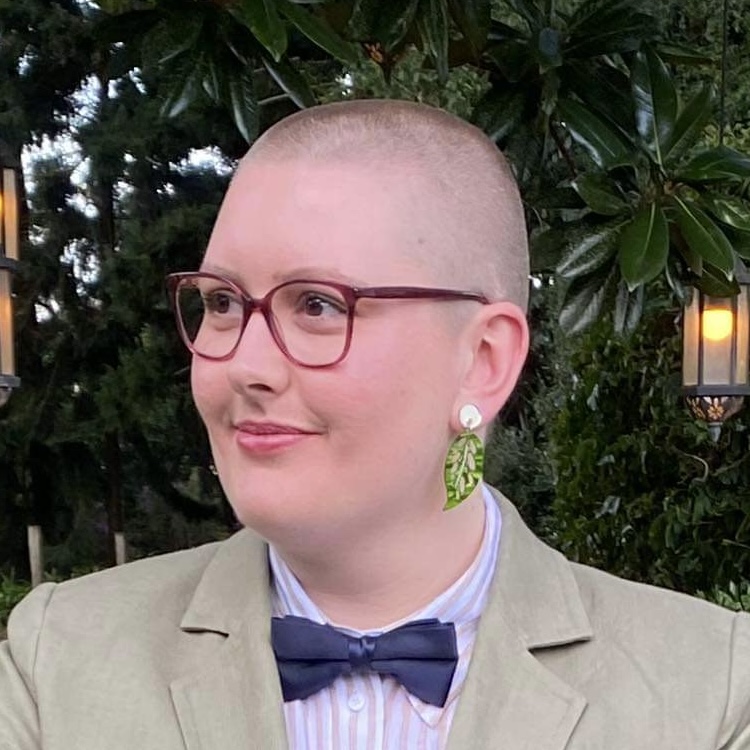
Phoenix Mendoza is an author of gothic horror as well as vivid and visceral short stories focusing on connection and the human condition. She writes with heart and feeling, making for some striking and memorable short stories. Her first collection of short stories is available now.
Read on to find our interview!
The Interview
Anna: A (hopefully) easy one to start. What was it that drew you to, and got you started in writing?
Phoenix: As long as I can remember I’ve been a storyteller. I loved telling theatrical horror stories at sleepovers to terrify my friends, and often embellished books when I read them aloud, making up details on my own. As a very young child I would entertain myself before falling asleep or on long car rides by imagining complex worlds with a cast of characters and ongoing plots and conflicts. Naturally, as soon as I could put pen to paper this furious imagining shifted from idle daydream, to writing. It was a hobby that never left me.
Anna: That is such a great author progression – those sleepover stories would have been the best!
You’ve recently published a collection of short stories (congrats!) what is it about short-form writing that you love?
Phoenix: I write both short-form and long-form, but short-form will always be my passion because of the challenging framework brevity provides. I am a long winded writer by nature, and tend to overwrite sensory descriptions at every opportunity, but short-form necessitates that I choose my words carefully, and say only what I mean to, and must. So many books right now are needlessly lengthy and say very little in their numerous pages, as they’re full of padding that gently takes the reader’s hand and guides them along, telling them everything they need to know, and never allowing them to wonder or think for themselves. To me, these books feel insecure and terrified of being misunderstood. I enjoy how short-form writing requires me to take risks, be bold, and trust my readers to comprehend my theses, (or accept the discomfort, both theirs and mine, if they don’t). Ultimately, short-form allows me to be my starkest, truest, and most unapologetic self, which is always my goal as an artist.
Furthermore, some of the most powerful pieces of writing I’ve read that have stuck with me my whole life are– Shirley Jackson’s The Lottery or The Veldt by Ray Bradbury, for example. I love the punchiness and vibrancy and utter memorability of reading a great short story, so I seek to deliver the same haunting blow with my own.
Anna: I love that about short stories, and like you said, especially the challenge of writing them.
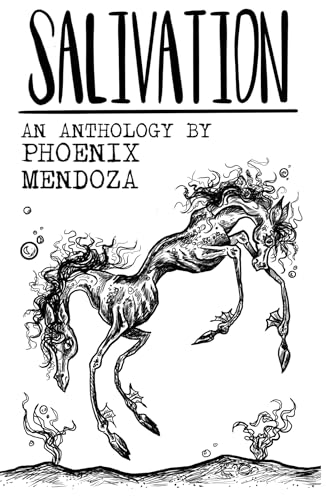
Your anthology, Salivation, explores human connection in such a vivid and visceral way. What was it about that theme that made you want to explore it like this?
Phoenix: Oh, a fun onem I didn’t know you’d read my book!
So, I tend to explore every theme vividly and viscerally. I know many people perceive writing as an intellectual or cerebral pursuit, and that is part of it, but for me, it’s also deeply sensory, even carnal. That’s the difference between showing and telling, in my opinion–we can tell a reader that a character is sad, or we can show them that character is sad by describing the deep, solar-plexus aching sensation below the lungs of sadness. However, the themes of hunger and loneliness are particularly of the body, so its natural Salivation was a particularly visceral collection! I also think many of those stories are about the universal experiences that tie us together– we have all felt hungry and we have all felt lonely, and we have all, at some point, longed for connection. But we also shit every day, eat every day, battle nausea and ennui and arousal (or lack thereof) every day! Those physical sensations are integral to what it feels like to be alive, so they are also universal, as we all possess bodies. They are the great equalizer, making bodily fluids and human connection intrinsically twined for me!
Anna: Yes, of course! I’m not quite finished yet but I really like what I’ve already read. I want to try and read at least one book from each author I interview – yours sounded especially interesting!
I love that as a way of viewing writing – I love when something I’m reading gives me the feeling I can reach through the page to touch the words. It works especially well in your anthology.
From reading the preface, you said you’ve plucked these stories from all over your writing career. I imagine your writing process would have changed over time, but as a whole is there a lot of planning that goes into your short stories? Or is your process more intuitive? (From your work, I can imagine it would be both!)
Phoenix: It really depends on the story! Some stories fall out of me with very little planning, and I discover my characters and what they mean to say as I write their story. The word inspire comes from the latin word “inspirare” which means to breathe, or to blow into, as if we were a flute for the breath of creativity to rush through. I think truly inspired writing feels like that, as if I’m not writing with agency at all but instead existing merely a vessel for divine synthesis. This is rare for me, though, and usually I go into my short stories with some element of planning–often a thesis, a main character, and a loose beginning, middle and end structure. That being said, never have I written a story where I wasn’t surprised by something that came out of me during the process! Even the most outlined stories often deviate and develop a life of their own once I get going.
Anna: I really like that as a process, there the planned and not planned work seamlessly together. I love it when anything I am writing takes me somewhere unexpected.
What was it that drew you to self publishing for this collection, rather than the traditional route?
Phoenix: So very few agents represent short story collections, and very few publishers take them on as debuts from new authors. Most of the publishing world is focused on novels or memoirs, and the route for publishing short form requires submitting individual stories to literary magazines and contests so they’re published elsewhere before compiling a collection. And I just did not have the patience for that! Since the stories in Salivation were adapted from older works, I was eager to release them and say goodbye to them. I’d been sitting with them so long and it was time to relinquish my hold, where traditional publishing would have required me to continue being in conversation with their development. I might pursue traditional publishing for novels in the future, but I tend to feel like my work is too weird and gross to be commodifiable in mainstream publishing at this stage in my career, and I loathe the networking and self-promotion game, which is such a huge part of traditional publishing. I am not interested in compromising or toning myself down even a little bit, and I already have a dedicated readership, so self-publishing feels like the correct route for me right now!
Anna: That makes complete sense, getting into traditional publishing without a mainstream idea or writing form is tough! I think it’s so good you didn’t relinquish any of your desires for this work and went down the self-publishing route.
What has been something you have found challenging about self-publishing your anthology?
Phoenix: Honestly, vulnerability is the most challenging aspect. It’s one thing to share my stories with a small cohort of fellow writers and readers who already know and enjoy my work and understand what to expect from me. But it’s another thing entirely to just release it and promote it to literally anyone who wants to buy it! Knowing people might come into it cold, with no knowledge of my work, and possibly approach it with bad faith readings, is scary. We’re living in a time where many people perceive discomfort as harm, and my writing is designed to make the reader uncomfortable, so I know there’s always a chance people might hate when I do. Which is fine! But I did find it a challenge to just accept the reality that not everyone was going to like Salivation and thats just a part of publishing.
Anna: I completely understand that – there is a part of yourself in every part of what you produce, including marketing and sales which is a lot to put forward for people. Especially with what you write.
Is there something you have found you loved about the self-publishing process?
Phoenix: I loved the freedom of self publishing. To be able to release whatever crazy stories I wanted, to include blurbs before each story about my process, to use my own artwork as the cover–essentially, to be as self indulgent as I wanted to!
Anna: That is so wonderful to hear! The freedom is one of my favourite parts of self-publishing as well.
I’d love to hear about what you’re currently working on or something you’re planning at the moment.
Phoenix: Currently, I’m writing a gothic horror piece called Thorngale about two brothers growing up in extreme, parasitic isolation in a mouldering estate on the Cornish coast between WWI and WW2. It started out as a novella but it’s looking more and more like a novel the more I write it. I’m actually going to Cornwall next month for research and immersion reasons! I’m extremely excited, this piece has been so dear to me and so incredibly fun and challenging and self indulgent to write.
Anna:
That sounds so interesting! That research trip will be wonderful too. So glad to hear it’s been fun to write.
Just a few questions to go. This one may sound a bit strange considering what you write, but I am interested to see your response. If given the opportunity to bring your writing to a visual form of some sort, would you? If yes, what would you want it to be?
Phoenix: Oh I actually love this one haha! So I think about this a lot because I’m a professional tattoo artist in addition to being an author, and therefore a very visual person. I’ve thought of trying my hand at graphic novels before in order to incorporate my two mediums, but given the opportunity to explore any visual outlet for my work, I think film would be the best fit. Something zany and colorful and grotesque, like a Gregg Araki film or Tod Haynes’s Velvet Goldmine, with wild practical effects and nonlinear storytelling.
Oh I actually love this one! So I think about this a lot because I’m a professional tattoo artist in addition to being an author, and therefore a very visual person. I’ve thought of trying my hand at graphic novels before in order to incorporate my two mediums, but given the opportunity to explore any visual outlet for my work, I think film would be the best fit. Something zany and colorful and grotesque, like a Gregg Araki film or Tod Haynes’s Velvet Goldmine, with wild practical effects and nonlinear storytelling.
Anna: I’m so glad! That would be amazing!! I would love to see something like that from your work. It is already so vivid with the way you write, so to see it how you want it would be so good!
And (sadly!) last question, do you have any advise for other indie authors trying to navigate the crazy indie-publishing world?
Thank you so much for doing this interview with me! It has been wonderful chatting with you!
Phoenix: Thank you so much Anna, this has been so fun! I hope you continue to enjoy my work.
As for advice, I think staying true to your artistic vision is so important. There’s a lot of pressure to be a certain way, write certain things, and market yourself within a certain rubric. But the indie publishing world doesn’t need a bunch of copies of copies, it needs bold, fanged writing from unapologetic, confident new voices. Thinking outside the current mold and currently popular tropes towards more exciting horizons, and telling the stories you truly want to tell regardless of how they’ll be received is the best possible way to remain authentic and produce quality, honest work.
Anna: I’m sure I will! Thank you again for joining me for this interview!
I will be continuing this series with a host of wonderful indie authors. I can’t wait to share these interviews with you all!


 A. E. Bratchford
Leave a reply to Anna Bratchford Cancel reply